
You are not just selling tacos, burgers, or bao. You are selling a place for people to exist whenthey do not want to be at home or at work. That in between spot is exactly what people arecraving right now. About half of American adults report feeling lonely, and national brands arequietly pivoting back toward dine in as a way to create connection again.
The good news is this: you do not need a design degree to tap into this trend. You just need tothink like a host, not a landlord. With a few smart choices in layout, lighting, and finishes, yourrestaurant can become the third place your neighborhood casually claims as “ours.”

The Third Place Is Back, Y’all
Sociologists use “third place” to describe the social space that sits between home and work, andit has roared back into restaurant and cafe conversations. Guests are saying they want acomfortable environment that feels like a second living room, not just a quick transaction at thecounter.
A simple way to pressure test your space is to walk in as a guest and ask yourself: “Wherewould I naturally sit, plug in my laptop, and stay for an hour without feeling rushed?” If thehonest answer is “nowhere,” you just found your first design project. The goal is not to addtrendy decor just for photos. The goal is to shape the room so it feels natural to land, stay, andcome back again next week.
Design For Linger Time, Not Just Turn Time
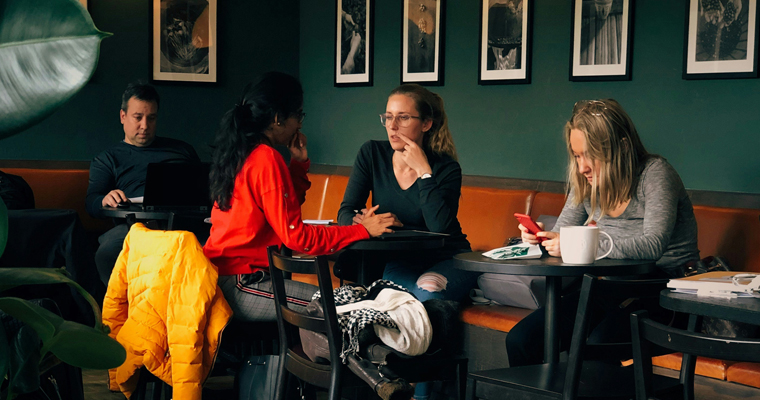
You still need table turnover, but the modern win is “linger time” that leads to bigger checks andrepeat visits. Younger diners especially are using restaurants and coffee shops as study halls,co working hubs, and social hangouts.
The layout should quietly support that behavior. Imagine one side of the dining room with asimple row of two tops that can easily push together so a solo guest can sit at lunch, and thenlater that night a group of four can slide the tables into a cluster without anyone askingpermission. Just by giving guests furniture that moves with their needs, you make the space feelflexible, comfortable, and worth using again. When your dining room supports both quick bitesand long hangs, you are not just serving meals. You are building regulars.
Sound And Light: The Silent Profit Centers
Noise has quietly become one of the biggest complaints in restaurant reviews. If guests areraising their voices to be heard, they are not staying for another round or leaving talking abouthow relaxing your place felt.
You do not have to gut the building to fix that. Start by mixing hard and soft surfaces in theroom. If you already have concrete floors and a hard ceiling, bring in upholstered banquettes,fabric wall art, or even a few soft acoustic panels disguised as decor. Once some of the echo isabsorbed, conversations sound closer and calmer, which makes guests more willing to linger.
Pair that with warm, layered lighting that keeps the focus on faces and food, not the ceiling, andsuddenly your space feels cozy in person and rich on camera without a single major remodel.

Instagramable Without Turning Into A Theme Park
Guests want spaces that are worth posting, but they also want authenticity. The sweet spot is arestaurant that feels comfortable from every seat, with one or two stunning spots that quietlyinvite photos.
Instead of filling every wall with a different concept, choose a single photo wall that reallycaptures your brand. That might be a textured plaster wall with a clean logo, a mural that nodsto the local neighborhood, or a grid of framed photos from community events. When guests walkin, there is one obvious “we have to grab a photo there” spot, while the rest of the dining roomstays calm, functional, and easy to maintain. That single design move gives you a recognizablevisual identity without turning the entire restaurant into a theme park.
The third place trend is not a passing fad. It is a response to loneliness, changing work patterns,and a generation that wants experiences they can feel and share, not just food in a box.Designing for that does not require a huge construction budget. It requires intentional choicesabout where people sit, how the room sounds, what they see when they look up from their plate,and whether they can imagine themselves coming back on a random Tuesday.
If your restaurant currently feels more “in and out” than “pull up a chair,” this is the perfect timeto rethink your layout, sound, and lighting so your space becomes the neighborhood go to spot.
Cohesive Design Group helps restaurants turn regular dining rooms into true third places. We can map your layout so solo guests, couples, and groups all have a natural place to land, anddesign acoustic and lighting plans that make conversations easier and photos better.
If you want your restaurant to feel like the spot people choose on autopilot, not the backup plan,reach out to Cohesive Design Group and let us sketch the next version of your space.